Indiana storm season brings more than just wind and rain. It brings power surges, the kind that can shorten the life of your refrigerator, your HVAC system’s control board, and every device plugged into an outlet the moment lightning strikes a nearby line or the power flickers back on after an outage. A whole-home surge protector is designed to catch that spike before it reaches your wiring, but a lot of homeowners assume it does more than it actually does, or install one without addressing the panel behind it.
Here’s what a whole-home surge protector genuinely covers, where its limits are, and why pairing one with an outdated electrical panel does more for your home than either upgrade on its own.
What Causes Power Surges in the First Place
Not every surge comes from a lightning strike. In fact, most don’t. The bigger culprits are usually closer to home:
- The power grid restoring service after an outage
- Large appliances cycling on and off, like your AC compressor or well pump
- Utility equipment switching or grid fluctuations down the line
- Aging or overloaded electrical panels that can’t regulate load smoothly
These smaller, repeated surges rarely cause a dramatic failure. Instead, they quietly wear down the sensitive electronics in your appliances, thermostats, and HVAC control boards over months or years, shortening their lifespan without an obvious cause.
What a Whole-Home Surge Protector Actually Does
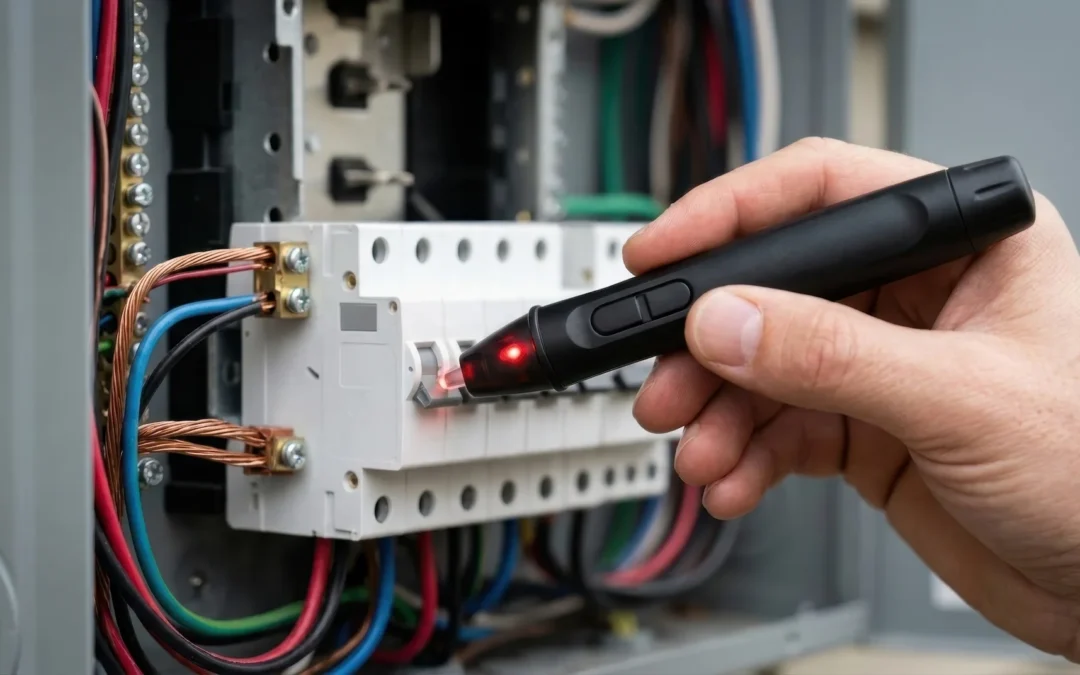
A whole-home surge protector is installed directly at your electrical panel, not on individual outlets. When installed correctly, it monitors incoming voltage and diverts excess electricity away from your home’s wiring the moment a surge is detected, before it ever reaches your outlets, appliances, or HVAC system.
Compared to a plug-in power strip, a whole-home unit protects everything connected to your panel at once: your furnace, your air conditioner, your water heater, your garage door opener, and every hardwired system in between. It’s a single point of protection instead of a device-by-device patchwork.
What It Doesn’t Protect Against
This is where expectations often get ahead of reality. A whole-home surge protector is not a lightning rod, and it won’t prevent damage from a direct lightning strike to your home. It also won’t fix underlying wiring problems, an undersized panel, or a system that’s already overloaded. It reacts to surges. It doesn’t correct the conditions that make surges more frequent or more damaging in the first place.
That distinction matters. If your panel is older, undersized for your home’s current electrical demand, or already showing signs of strain, a surge protector is treating a symptom while the actual risk sits upstream at the panel itself.
Signs Your Home Might Already Be Vulnerable
A few warning signs suggest your electrical system may need more than just added surge protection:
- Lights flicker or dim when larger appliances kick on
- Breakers trip more often than they used to
- Your panel is original to a home built decades ago
- You’ve added major appliances, an EV charger, or a home addition since your panel was installed
- Outlets feel warm or you notice a faint burning smell near the panel
If any of these sound familiar, a surge protector alone won’t solve the underlying issue. It’s worth having your electrical system evaluated to see whether your panel can actually support what you’re asking it to do.
Where Surge Protection Fits With a Panel Upgrade
An electrical panel upgrade replaces an aging or undersized panel with one built for your home’s current load, safely distributing power to everything from your HVAC system to a home generator or EV charger. Pairing that upgrade with a whole-home surge protector closes the loop: the panel handles the load correctly, and the surge protector catches the spikes the panel alone can’t stop.
This combination matters even more if you already have, or plan to add, a home generator. The transfer between grid power and generator power is itself a moment where surges are more likely, which is exactly when whole-home surge protection earns its keep.
Right Now: Free Surge Protector With a Panel Upgrade
Through this offer, homeowners who complete an electrical panel upgrade with us get a whole-home surge protector installed at no additional cost. Instead of treating these as two separate projects, you get the panel built to handle your home’s actual load and the added layer of protection in a single visit.
If you’ve been putting off a panel upgrade because it felt like just one more expense, this is a straightforward way to get both jobs done together.
Frequently Asked Questions
Do I need a whole-home surge protector if I already use power strips?
Plug-in power strips only protect what’s plugged into them, and many only handle smaller surges. A whole-home unit protects your entire electrical system, including hardwired appliances like your furnace and AC, which power strips can’t reach.
Will a surge protector prevent damage from a direct lightning strike?
No. A whole-home surge protector reduces damage from voltage spikes on your electrical lines, but a direct lightning strike carries far more energy than any surge protector is designed to handle.
How do I know if my electrical panel needs to be upgraded?
Frequent tripped breakers, flickering lights when appliances start, an outdated panel, or plans to add an EV charger or generator are all signs it’s worth having your panel evaluated.
Is a whole-home surge protector a one-time installation?
Yes, it’s installed once at your electrical panel and continues protecting your home’s wiring going forward. It doesn’t require ongoing maintenance beyond a standard electrical inspection.
Can I get a surge protector without upgrading my panel?
Yes, but if your panel is already outdated or undersized, a surge protector addresses one risk while leaving the underlying capacity issue unresolved.
What’s included in the free surge protector offer?
Homeowners who complete a qualifying electrical panel or service upgrade with us receive a whole-home surge protector installed at no additional cost as part of that project. Financing options are available if you’d rather spread the cost of the panel upgrade over time.
What areas does Edwards Royal Comfort serve for electrical panel upgrades?
We serve Greencastle, Crawfordsville, Danville, and surrounding communities, including Avon, Brownsburg, Plainfield, and Greater Indianapolis.
Protect What’s Already Running Through Your Walls
A surge protector is only as good as the panel it’s connected to. If you’ve been meaning to address an aging panel, storm season is a reasonable time to do both at once, and right now, the surge protector comes with it.
Get your free surge protector with a qualifying panel upgrade or call us at 765-323-4433 to find out if your home qualifies.
