
Forecasts call for about 2.2 inches of rain across West Central Indiana around Monday, September 7, 2026. That is enough water to fill a pit, overwhelm a tired pump, and put a finished basement at risk. If you live in Greencastle, Crawfordsville, Danville, or a nearby town, the time to look for sump pump warning signs is this week — not after you smell damp carpet.
A sump pump is the last line of defense between groundwater and your floor. Most of the year it sits still. Then a soak like the one in the forecast hits, and you find out in a hurry whether it still works. Edwards Royal Comfort Heating, Air & Plumbing has been in these homes since 1999. We know which pumps make it through a wet week and which ones quit at 2 a.m.
Request a Sump Pump Inspection or call 765-323-4433.
Why This Rain Is a Basement Problem, Not Just a Driveway Problem
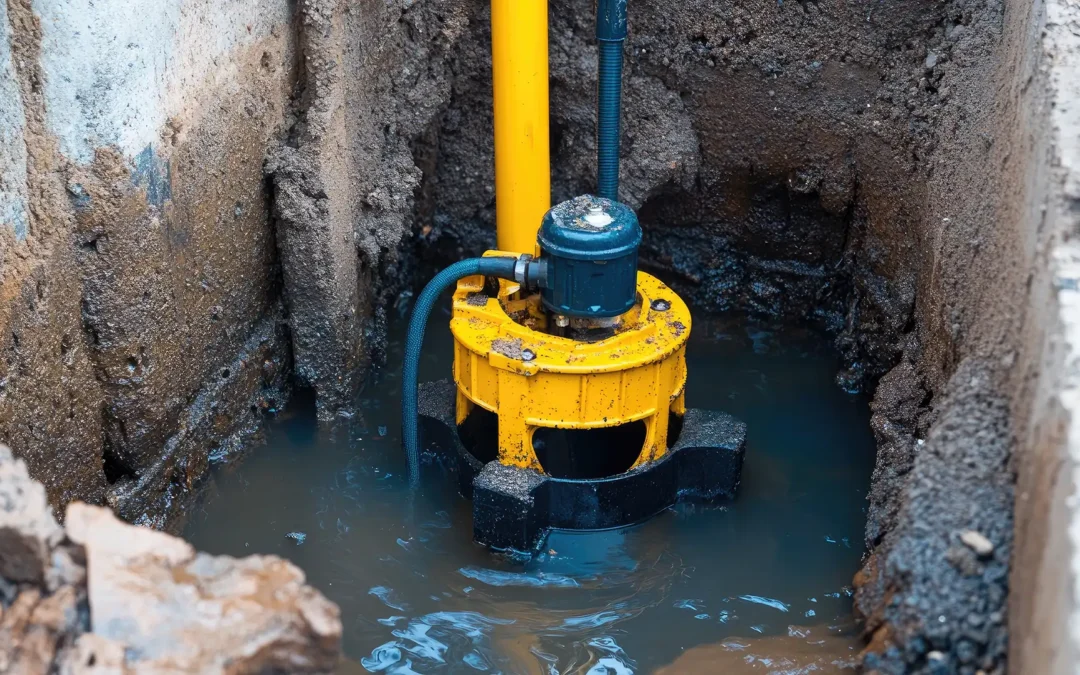
Indiana clay holds water. When a storm dumps more than two inches, the ground around a foundation saturates, the water table rises, and the pit in your basement or crawl space starts to fill. That is normal. What is not normal is a pump that cannot keep up.
Homes around Waynetown, Avon, Brownsburg, Plainfield, and Greater Indianapolis see this every wet stretch: a pump that “worked last spring,” a discharge line that froze or clogged and never got cleared, a battery backup that has been sitting dead since the last outage. The rain does not cause those failures. It exposes them.
If you already have water on the floor, stop reading and call 765-323-4433. If the pit is still dry, walk downstairs this evening and run through the checks below.
9 Sump Pump Warning Signs to Check Before the Rain
You do not need tools for most of these. You need a flashlight, five minutes, and a willingness to look.
1. You never hear it run or you cannot remember the last time it did
A healthy pump kicks on when the float rises and shuts off when the pit drops. If you have lived in the house for a year and have never heard that cycle, the float may be stuck, the unit may be unplugged, or the pump may have failed quietly. Silence is not a good sign. Pour a few gallons of water into the pit (if you can do it safely) and watch. No start means you have a problem before the storm, not during it.
2. Grinding, humming, or rattling from the pit
A clean start-and-stop sound is fine. Grinding often means worn bearings or debris in the impeller. A hum with no water moving can mean the motor is seizing. Rattling can be a loose impeller or a check valve slapping. Any of those sounds is a reason to schedule plumbing service, not a reason to turn up the TV.
3. The pump runs constantly or short-cycles
A pump that never shuts off is working too hard — a stuck float, a failed check valve letting water run back in, or a discharge line that is clogged, kinked, or dumping too close to the foundation. Short-cycling (on, off, on, off) wears the motor and is a classic warning that the pit is not emptying the way it should. Either pattern can burn a pump out in the middle of a long rain.
4. Standing water in the pit when it has not rained
A little residual water in the bottom of the basin is common. A pit that stays half full, or water that returns minutes after a cycle, points to a bad check valve, a cracked basin, or groundwater already pressing in. If the pit is high before this forecasted 2.2 inches, it will not have far to go once the rain starts.
5. Rust, cracks, or a pump that looks older than the carpet
Cast-iron housings rust. Plastic housings crack. Cords fray. Many residential pumps last around 7 to 10 years; some fail sooner in hard water or heavy-use pits. If you cannot remember installing it, treat age as a warning sign on its own. An inspection is cheaper than a wet basement and a rushed replacement at night.
6. A gunked-up or stuck float switch
The float is the on/off switch. Silt, gravel, and the gunk that collects in Indiana pits pin it in place. If the float cannot rise, the pump never starts. If it cannot drop, the pump never stops. Lift it gently (power off first if you are not sure). If it binds, do not force it — that is a service call.
7. A musty smell, water stains, or damp spots on the floor
Your nose often beats the pump. Must, white mineral lines on the block, or a ring around the basin mean water has been in that room before. The next heavy rain does not need to be “the worst storm of the year” to do it again. It only needs a pump that is already behind.
8. No backup or a backup you have never tested
Storms knock power out. A primary pump with no battery or water-powered backup is a single point of failure. If you have a backup, test it now, not during the outage. Dead batteries are one of the most common things we find on inspection visits.
9. The discharge line is crushed, disconnected, or dumping at the foundation
Follow the pipe outside. If it is buried, look for the exit point. A crushed, frozen-off, or disconnected line sends water right back toward the house. A line that dumps against the foundation can recycle the same water into the pit all night. Clear the outlet. If you cannot find it, that belongs on the inspection list.
What to Do If You Catch a Warning Sign This Week
Unplug the pump only if you are comfortable doing so and the pit is not already filling. Do not stand in water to inspect electrical cords. Do not keep resetting a breaker that trips. Those are jobs for a technician.
Edwards Royal Comfort handles plumbing services across Greencastle, Crawfordsville, Danville, and the towns around them, in partnership with Bassett Services. That includes sump pump inspection, repair, and stand-alone install. If the pump is done, we also have $100 off a stand-alone sump pump install — exclusions apply; call for details.
If you need a replacement and want to spread out the cost, ask about financing when we are on site. Approval is not guaranteed; we will walk you through options rather than surprise you at the door.
Book a Sump Pump Inspection Before the Rain
We check the pump, float, check valve, discharge path, and backup so you know whether this system will make it through the next soak. Request the inspection (name, phone, email, and a short note about what you are seeing in the pit). Or call 765-323-4433. This is a scheduling request, not an instant online quote. Members get priority scheduling. If you are already on a service agreement, say so when you call.
After the Rain: A Hard Freeze Is in the Forecast Too
Some forecasts show a hard freeze right after this rain, including a low near 0°F around Tuesday, September 8, 2026. That is a forecast, not a guarantee — and it is still a reason to treat the furnace like the sump pump: check it before you need it.
A wet basement and a furnace that has sat since last winter is a bad pairing. If the pump keeps the floor dry, the next job is heat. Edwards Royal Comfort is a Bryant Factory Authorized Dealer with NATE-certified technicians. A $59 furnace tune-up (geothermal included) is on the table; exclusions apply. If a repair is needed, the Royal Repair Guarantee covers heating and cooling work for a year, or the fix
